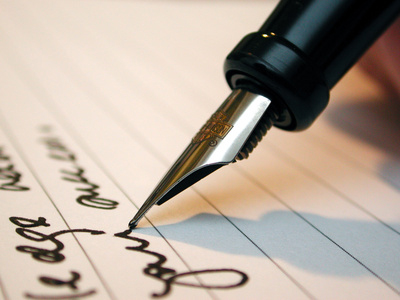
How to write Good and Right Answers?


Image result for writing pictures

Hello Students!


Let me share with you 10 useful tips to help you write your answers better.

1.       Good handwriting creates the best impression. Keep practising.

2.       Maintain legibility: answers should be within the margins.

3.       One mark questions should always be answered in short. (in a word, phrase or a sentence max.). Highlight the right point.

4.       A paragraph answer question should be answered precisely to the point.

5.        Focus on correct grammar and right construction.

6.        Underline the key points and “quote” lines wherever necessary from the text book.

7.     For 4 mark answer, a short introduction & conclusion would be ideal. For a 6 marker, elaborate on the details.

8.       Fill-in-the blanks questions from grammar should be answered in a complete paragraph and underline the right answers.

9.        “Indirect Speech” based questions should be solved as many as possible. 

10.   Finally, plan your time, just relax and answer. Recheck your answers for the unnoticed mistakes.


ALL THE BEST

Comments

  1. Sir, is it enough if we read only the summaries of all chapters from this blog for exam??

    ReplyDelete
    Replies
    1. Hi
      Thanks for following my blog. My attempt is to guide you to get the maximum possible. You can always help yourselves with the text book for the ultimate results. Thanks..

      Delete

Post a Comment

Popular posts from this blog

Watchman of the Lake Summary | Notes

Click for Questions & Answers Introduction R.K. Narayan is a well-known Indian writer who has written a series of books creating characters and situations that revolve around a fictitious town Malgudi. He is one of the three most prominent writers of early Indian literature in English. He showcased Indian Literature in English to the rest of the world. R.K. Narayan is regarded as one of India’s greatest English novelists. “Watchman of the Lake” is a dramatized version of his story, “The Watchman”. Synopsis “Watchman of the  Lake” is a beautiful dramatic adaptation of R.K. Narayan’s story which narrates the legend about a great rustic Mara’s sacrifice made for the conservation of a lake for the sake of the lives that depended on it for their survival. This play also highlights the invaluable gift of folk wisdom to humanity. Theme Scene 1 The play is set in a village near BabaBudan Hills in Karnataka. Mara, the protagonist and an innocent rustic presents ...

Everything I Need To Learn From The Forest II PU English Summary | Everything I Need To Learn From The Forest II PU English Notes

Click for the Questions and Answers Vandana Shiva is an internationally renowned activist for biodiversity and against corporate globalization. In the essay “Everything I Need To...” she explains about her early lessons of environmentalism. She also tells us how she learned the ideals of a good life from the forests such as diversity, freedom and co-existence. Vandana Shiva’s ecological journey started in the forests of the Himalaya. Her involvement in the contemporary ecology movement began with “Chipko”. Chipko Movement It was a nonviolent response to the large scale deforestation in the Himalaya region. In the 1970s peasant women in the Garhwal, Himalaya had come out in defence of the forests. Vandana Shiva noticed a gradual loss of forests in this region. She then decided to become a volunteer for the movement. Bio-diversity - Navadanya Farm / Navadanya Movement Chipko Movement taught Vandana Shiva biodiversity. She realized the importance of biodiversity bas...

I Believe That Books Will Never Disappear Summary | Notes

  Interview with Jorge Luis Borges  Introduction Jorge Luis Borges was an Argentine short story writer, essayist, poet and translator. In this interview conducted by Roberto Alifano a poet, storyteller, essayist and journalist from the city of General Pinto, province of Buenos Aires Borges talks about his early years of reading, his family, his blindness, books, poetry, metaphors and literature.  First Reading / On his mother Asked about his first reading, Borges proudly says that he was educated at his father’s library where he first read Grimm’s Fairy Tales. His mother, according to him, was an extraordinary person but he regrets having not been understanding of her. He didn't give her happiness which makes him guilty. He says that all of us take our mother for granted. Accordingly, we should treat our mother better. He remembers his mother as an intelligent and gracious woman.   On blindness Blindness to Borges is a way of life. He calls whatever happens ...